Whole-home rodent exclusion resolves recurring vermin activity by eliminating ingress pathways rather than relying on ongoing chemical applications or exterior poison bait stations. In coastal Duval County, roof rats…
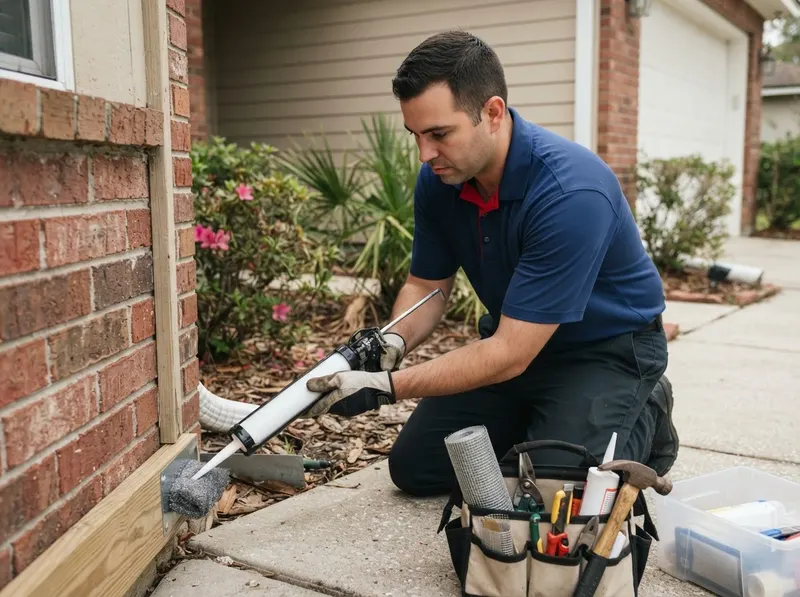
Whole-home rodent exclusion resolves recurring vermin activity by eliminating ingress pathways rather than relying on ongoing chemical applications or exterior poison bait stations. In coastal Duval County, roof rats exploit overhanging live oak canopies to access asphalt shingle rooflines, ridge vents, and junction gaps between fascia boards and soffits. Unlike basic pest control, which traps individual animals while leaving structural gaps exposed, exclusion creates a mechanical shield across the building envelope. Technicians install heavy-gauge galvanized steel mesh (quarter-inch hardware cloth), concrete repair mortars, and metal flashing across openings as small as one-quarter of an inch, which is sufficient space for an adult mouse to enter a home.
Residential architecture across Jacksonville dictates specific exclusion protocols. Historic crawl space foundations in Riverside, Avondale, and Ortega require specialized subfloor perimeter screening to prevent burrowing Norway rats from accessing plumbing chases beneath kitchens and bathrooms. In slab-on-grade subdivisions throughout Mandarin, Southside, Arlington, and Oceanway, air conditioning line chases, weep holes in brick veneer, and unsealed garage door weatherstripping serve as primary entry points. The St. Johns River basin creates localized high water tables and dense tree canopies that accelerate rodent pressures year-round, requiring building materials rated to withstand Florida humidity without rusting or corroding.
Executing exclusion requires an explicit sequence of diagnostic and remediation steps: 1. A complete 360-degree exterior envelope inspection from foundation footings to upper roof peaks maps every active and potential opening larger than six millimeters. 2. Technicians install galvanized hardware cloth, metal escutcheon plates, and specialized sealant compounds to close exterior voids. 3. Interior snap traps are placed in attics and crawl spaces to eliminate animals trapped inside the thermal envelope, monitored over a 7-to-14-day window. 4. Contaminated insulation and pheromone scent trails are addressed to prevent exterior rodents from attempting to gnaw through newly fortified barriers. The trade-off of full mechanical exclusion versus periodic extermination trapping is an upfront labor investment for long-term structural security, ensuring homeowners are not locked into open-ended chemical contracts.
Every job gets a firm, written price after a free on-site visit.
Tell us about your whole-home rodent exclusion job in Jacksonville and we'll send a clear, written quote, usually the same day.
 ClearWay Pest Control